In fiscal 2023, the Board of Directors decided to add “reduce water use” to our set of material issues in view of how vital water resources are to our businesses and in view of global socio-environmental trends. We had already been working to reduce water use through a process of continuous improvement under our environmental management system. However, with the new material issue added, we decided to step up these efforts so that we will reach our target for fiscal 2030, which is to cut water intensity (water use by unit of production) in plants by 3% from the fiscal 2021 level.
In accordance with the Prima Meat Packers Group Environmental Policy, we are implementing the following initiatives to reduce water usage and promote its efficient use.
Water withdrawal and consumption
| Water withdrawal in water-stressed areas*1 | Extremely high (80% or more) (km3) | (1) Consolidated | ― | ― | 584 | 643 | 627 | ― | |
|---|---|---|---|---|---|---|---|---|---|
| Number of sites | (1) Consolidated | ― | ― | 2 | 2 | 2 | ― | ||
| High (40–80%) (km3) | (1) Consolidated | ― | ― | 0 | 0 | 0 | ― | ||
| Number of sites | (1) Consolidated | ― | ― | 0 | 0 | 0 | ― | ||
| Medium to high (20–40%) (km3) | (1) Consolidated | ― | ― | 1,951 | 1,912 | 1,891 | ― | ||
| Number of sites | (1) Consolidated | ― | ― | 45 | 43 | 34 | ― | ||
| Low to medium (10–20%) (km3) | (1) Consolidated | ― | ― | 1,868 | 1,814 | 1,850 | ― | ||
| Number of sites | (1) Consolidated | ― | ― | 71 | 69 | 63 | ― | ||
| Low (10% or less) (km3) | (1) Consolidated | ― | ― | 1,193 | 1,344 | 1,411 | ― | ||
| Number of sites | (1) Consolidated | ― | ― | 33 | 37 | 37 | ― | ||
- *1Analysis based on the Aqueduct Water Risk Atlas.
Water-Saving Initiatives
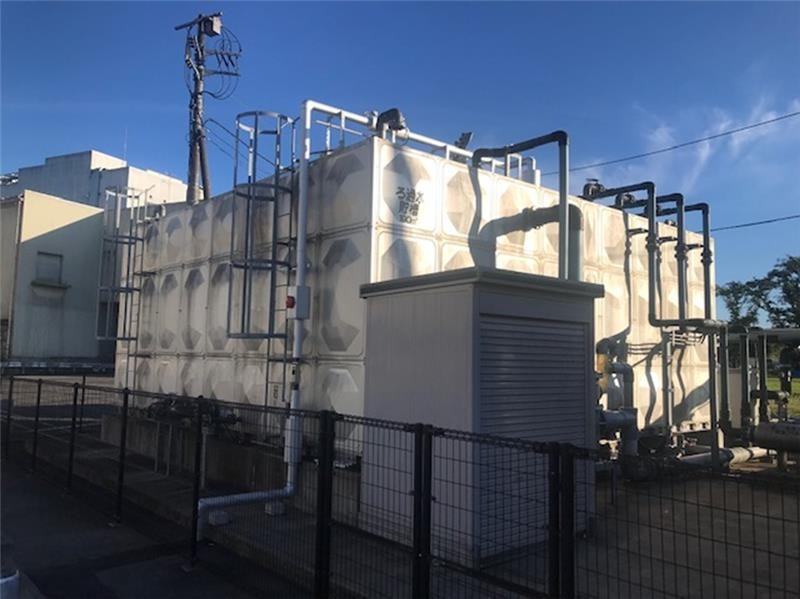
At the Ibaraki Plant, a key production site of Prima Meat Packers, Ltd., large volumes of water are used in the manufacturing process, with approximately 98% supplied by well water. The plant has filtration systems for water treatment, and regular backwashing is necessary to maintain system performance. This backwashing process also required large amounts of water.
To promote water conservation, we reviewed water usage points throughout the plant and focused on the frequency and timing of backwashing. By optimizing the backwashing schedule, we reduced water usage.
Reviewing Cleaning Methods
At Prime Delica Co., Ltd., in fiscal 2023, we selected and introduced an appropriate neutral detergent for floor cleaning. This made it easier to remove dirt from floors and reduced the amount of water used for floor washing. It also improved work efficiency and reduced work time.
In addition, when carrying out automatic cleaning by machine, the equipment had previously been turned on and off manually. We improved this process so that pressing a button starts a timer and the machine stops automatically, which also helps prevent the switch from being left on.
Continuous Improvement in Manufacturing Processes
At production sites in our plants, a company-wide initiative to remove meat scraps remaining in equipment and containers before cleaning has helped improve cleaning efficiency and reduce the amount of water used for cleaning. In addition, we are improving equipment layouts by reconfiguring them into continuous straight-line arrangements to help prevent meat scraps and other materials from falling during transport and transfer processes. These efforts also contribute to improvements in the manufacturing process.
Water Risk Assessment
To assess water-stressed areas, we use Aqueduct Floods, an assessment tool developed by the World Resources Institute (WRI). Based on our fiscal 2024 assessment, two sites in Thailand, representing 1.47% of our 136 sites, were assessed as being at high risk. We will continue efforts to reduce water usage, particularly at these sites.