
Reducing the volume of waste output is one of our material issues. In fiscal 2022, the Board of Directors set two targets for fiscal 2030: Plastic and food waste down at least 5% from the fiscal 2021 level per production output, and at least 98% of food waste generated during production recycled.
As for reducing the volume of waste output, we commit to targets for reducing waste intensity and work on waste reduction initiatives that avoid compromising business growth. For reducing food waste, we are promoting initiatives for resource circulation. For reducing plastic waste, as well as cutting the amount of plastic waste that Prima Meat Packers generates, we are also focusing on plastic waste generated from the raw materials we procure.
To help reduce food loss, in recent years we have been working on initiatives to extend shelf life, including the use of high pressure processing (HPP), a non-thermal technique that neutralizes microorganisms quickly.
Reducing food waste
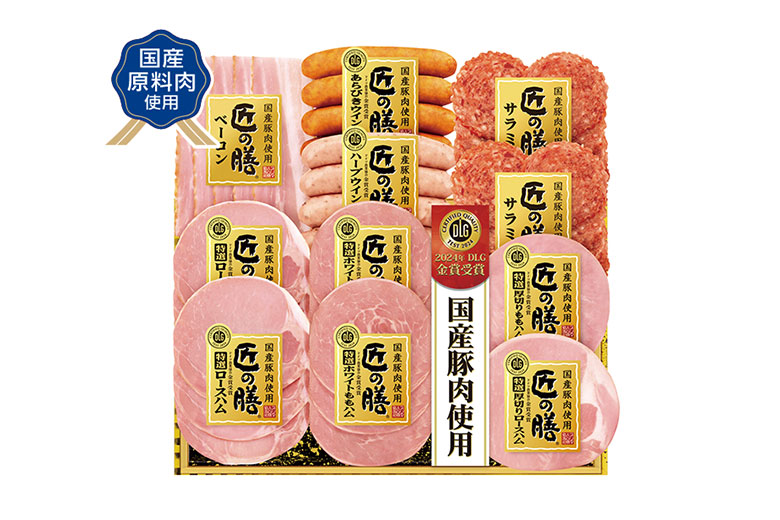
- Takumi no Zen® giftpack
By neutralizing microorganisms with high-pressure processing, we extent shelf lives from 35 days to 60 days.
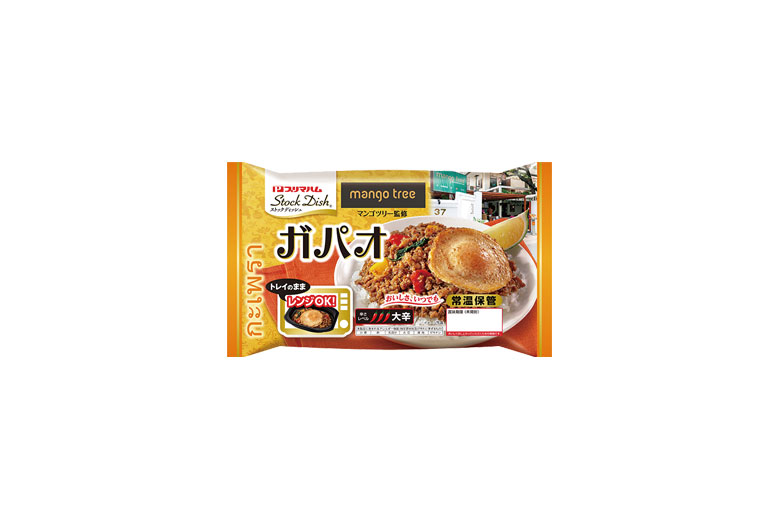
- Stock Dish®
The product remains fresh at room temperature for as long as 180 days, making it an ideal complement to a household’s regularly replenished stockpile of emergency food supplies.
Continuous Improvement in Manufacturing Processes
At production sites in our plants, we continuously work on improvements to reduce food waste as much as possible, including meat scraps generated from equipment cleaning during product changeovers and meat scraps removed from production lines. For example, we devise production plans to minimize product changeovers. We also improve equipment layouts by reconfiguring them into continuous straight lines to prevent meat scraps and other materials from falling during transport and transfer. These efforts also lead to improved manufacturing yield.
Resource Circulation Initiatives
Prima Meat Packers Group is working on initiatives to reuse waste generated through its business activities in collaboration with other companies.
Kagoshima Plant
To make use of the approximately 3 tons of waste smoke chips generated each month in the production of Koukun® Coarsely Ground Pork at the Kagoshima Plant, we launched an initiative in collaboration with Shinko Eco Co., Ltd., a local recycling company, to reuse the waste as compost for producing takana mustard greens on a farm operated by the company. The takana produced is processed by a local pickle company and then sold at local retailers.
Pacific Ocean Breeding Co., Ltd.
Environmental impact from pig excreta can be minimized through appropriate wastewater treatment and composting. At Pacific Ocean Breeding Co., Ltd., a group company of Prima Meat Packers, we are promoting initiatives to put compost produced on our farms to agricultural use.
At the Miyagi Farm, compost generated through pig farming is used mainly by nearby rice growers and is utilized in the cultivation of feed rice and other crops. In response to requests from local farmers, we also pelletize the compost in-house. In addition, we promote resource circulation by actively using feed rice grown with this compost as an ingredient in feed for our pigs.
We also mix into the compost materials such as wood waste and spent coffee grounds generated by other companies, thereby increasing components that are beneficial to the soil and contributing to soil improvement. The number of local farmers supporting these crop-livestock collaboration initiatives continues to grow. Going forward, we will continue working on the effective use of local resources while contributing to the development of local industries.
Prime Delica Co., Ltd.
In January 2026, Prime Delica Co., Ltd., a Prima Meat Packers Group company, launched an initiative at its Munakata Factory to establish a circular model for food and energy through collaboration among four companies: Prime Delica Co., Ltd.; Urban Energy Corporation, a retail electricity provider wholly owned by JFE Engineering Corporation; FUKUOKA Bio Food Recycling Co., Ltd., a subsidiary of J&T Recycling Corporation, which handles recycling business in the JFE Engineering Group; and Gaeadream Corp.
Food waste generated at the Munakata Factory is transported to FUKUOKA Bio Food Recycling through transportation coordination by Gaeadream, where it is transformed into electricity through biogas power generation using methane fermentation. Urban Energy purchases this electricity and supplies it to the Munakata Factory, thereby realizing a resource circulation loop.
Furthermore, by implementing the Zero Emission Plan®, a power plan that utilizes non-fossil fuel certificates designated for renewable energy against the amount of electricity used, the factory achieves zero effective CO2 emissions.
- The Zero Emission Plan® is a plan that supplies effectively 100% renewable energy by combining a customer’s entire electricity usage with non-fossil fuel certificates designated for renewable energy, thereby achieving an adjusted CO2 emission factor of zero.